The Noise of Ideas
a short film about a different way to learn science
"Don't ask what you will teach today.
Ask what they will do — together — to learn."
Ask what they will do — together — to learn."
scene 1 · an encounter
A brilliant teacher meets
a former student, years later.
a former student, years later.
Top grades, beautiful lessons. Yet of all that physics he remembers one thing only: X-rays. The single topic he had explored on his own, for a presentation.
What he did himself, stayed. What was explained to him, faded.
scene 2 · the real question
"Very few of your students will become physicists.
What do you want them to take away from the class?"
What do you want them to take away from the class?"
Not the formulas they will forget. Something more durable: the way scientists think — how an idea is built, and how it is put to the test. And that is learned together, not alone.
scene 3 · observe
It starts with something
anyone can observe.
anyone can observe.
The class wipes a streak of rubbing alcohol on paper, and watches it fade away. An everyday sight — yet we cannot see what matter is made of: water in a cup just looks like water.
Question 1 — why does it disappear so slowly, not all at once?
It must be made of pieces too small to see…
It must be made of pieces too small to see…
Question 2 — and what is the mechanism: how do those pieces disappear?
scene 4 · wild ideas
The class splits into small groups.
Three explanations emerge on the whiteboards.
Three explanations emerge on the whiteboards.
Group 1: the little pieces of liquid moved inside the paper — they are still in the paper
Group 2: the air somehow pulled the pieces out
Group 3: the pieces jump out by themselves
Every group shares its ideas with the whole class. Even the "wild" ones count: all explanations are equally valuable. Everyone has a voice.
scene 5 · the process
Then the class does
what scientists do.
what scientists do.
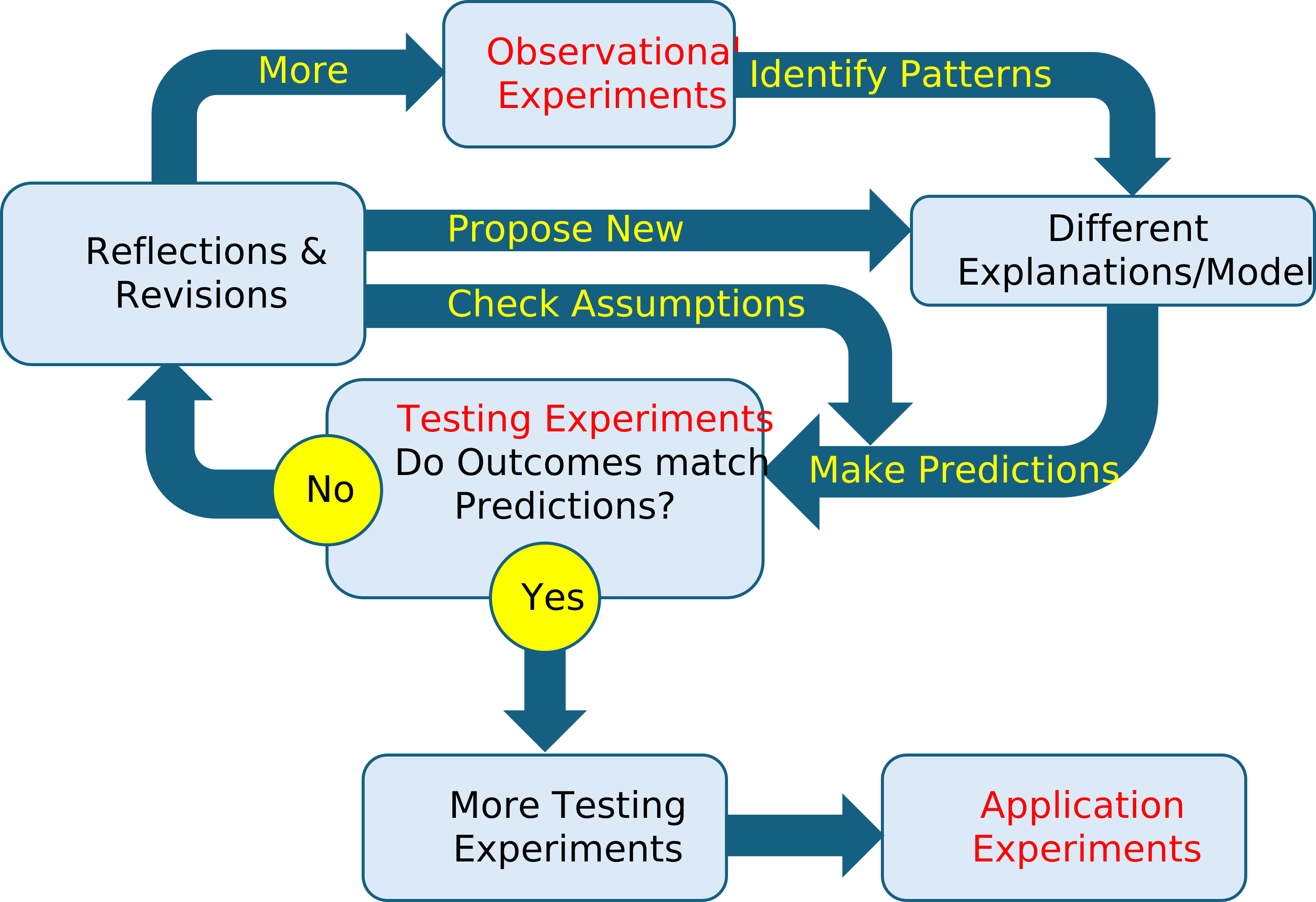
They can't all be right — how does the class rule ideas out? One group proposes a testing experiment: weigh the strip — dry, wet, and dried again. Only now, with the experiment on the table, can each explanation make its prediction: "if the liquid hid inside, then the dry paper will weigh more." Predictions are based on the explanations, not on gut feelings.
scene 6 · the golden rule
An experiment never proves
an idea right.
an idea right.
It can only fail to rule it out. This is the golden rule of science: the ideas that survive are not absolute truths — they are the ones that resisted every test.
if the idea is true
and we run this test,
then this must happen.
It doesn't? The idea is out. It does? It survives — for now.
scene 7 · disproving well
The scale returns
to the dry-paper reading. So?
to the dry-paper reading. So?
the liquid moved inside the paper
✓ idea ruled out — that's a result
Group 1's idea was disproved — not the group: here, ideas are put to the test, people are not. The whole class ruled it out together. In this mistake-rich room, no one is afraid to think out loud. Two experiments later, one idea survives: microscopic particles in random motion. The class has just invented the particle model of matter.
scene 8 · the noise
A class that thinks together
makes noise.
makes noise.
if our idea is true, the reading won't change
wait — how do you know that?
what are we assuming here?
let's try the vacuum jar!
look — it's back to the dry weight!
so which ideas survive?
Whiteboards fill up, groups argue and compare, ideas travel from table to table. It doesn't sound like a lecture hall — it sounds like a research lab.
scene 9 · the flow
And inside the noise,
something quiet happens.
something quiet happens.
Completely absorbed in the problem, students stop watching themselves: the self steps back, hours feel like minutes. Psychologists call it flow — it arises when the challenge is high and you feel equal to it. Research on ISLE labs finds most students right there, in the productive zones of flow and engagement.
"…wait, is class over already?"
scene 10 · real classrooms
This is not a dream.
It happens every day.
It happens every day.
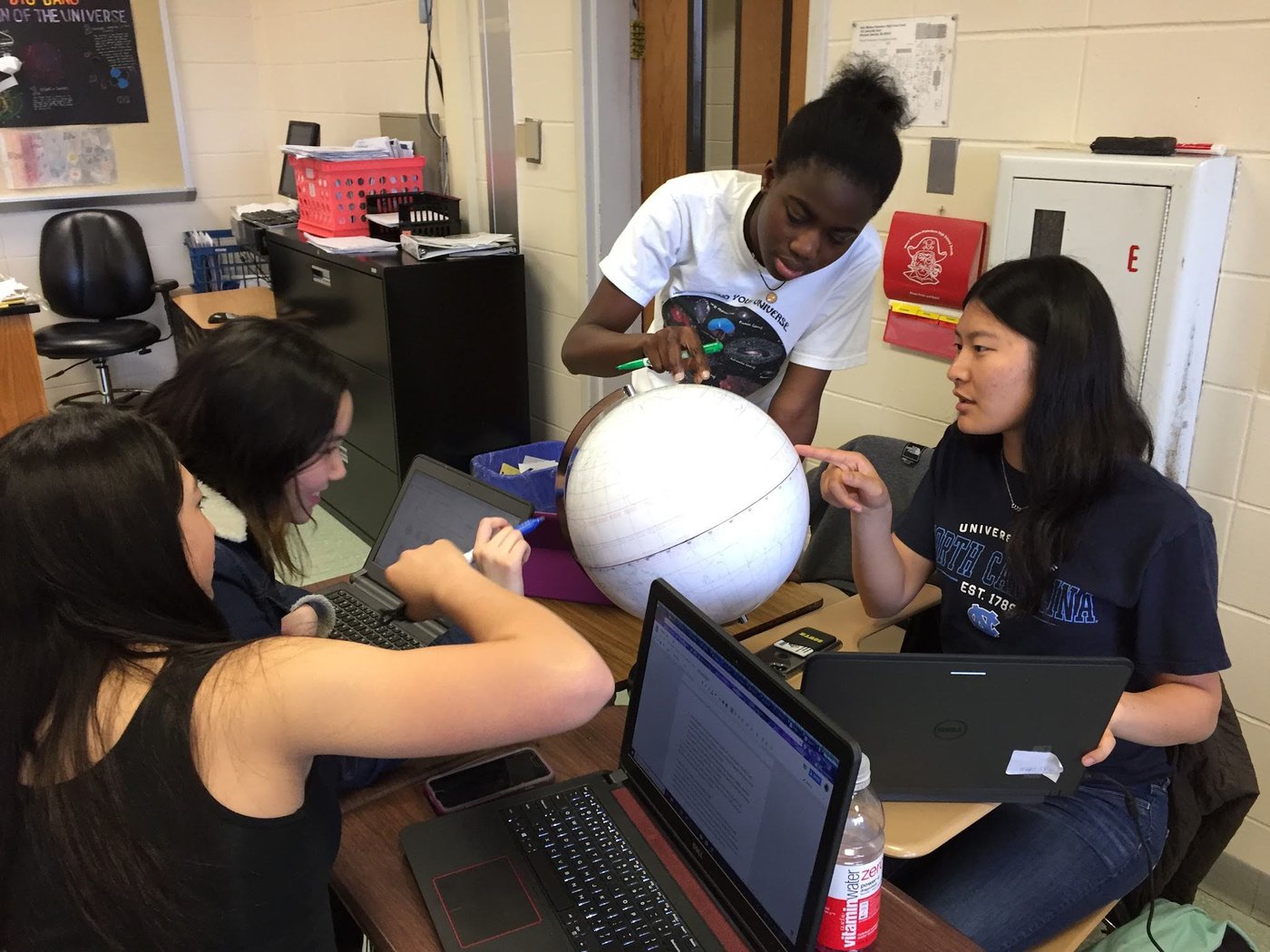
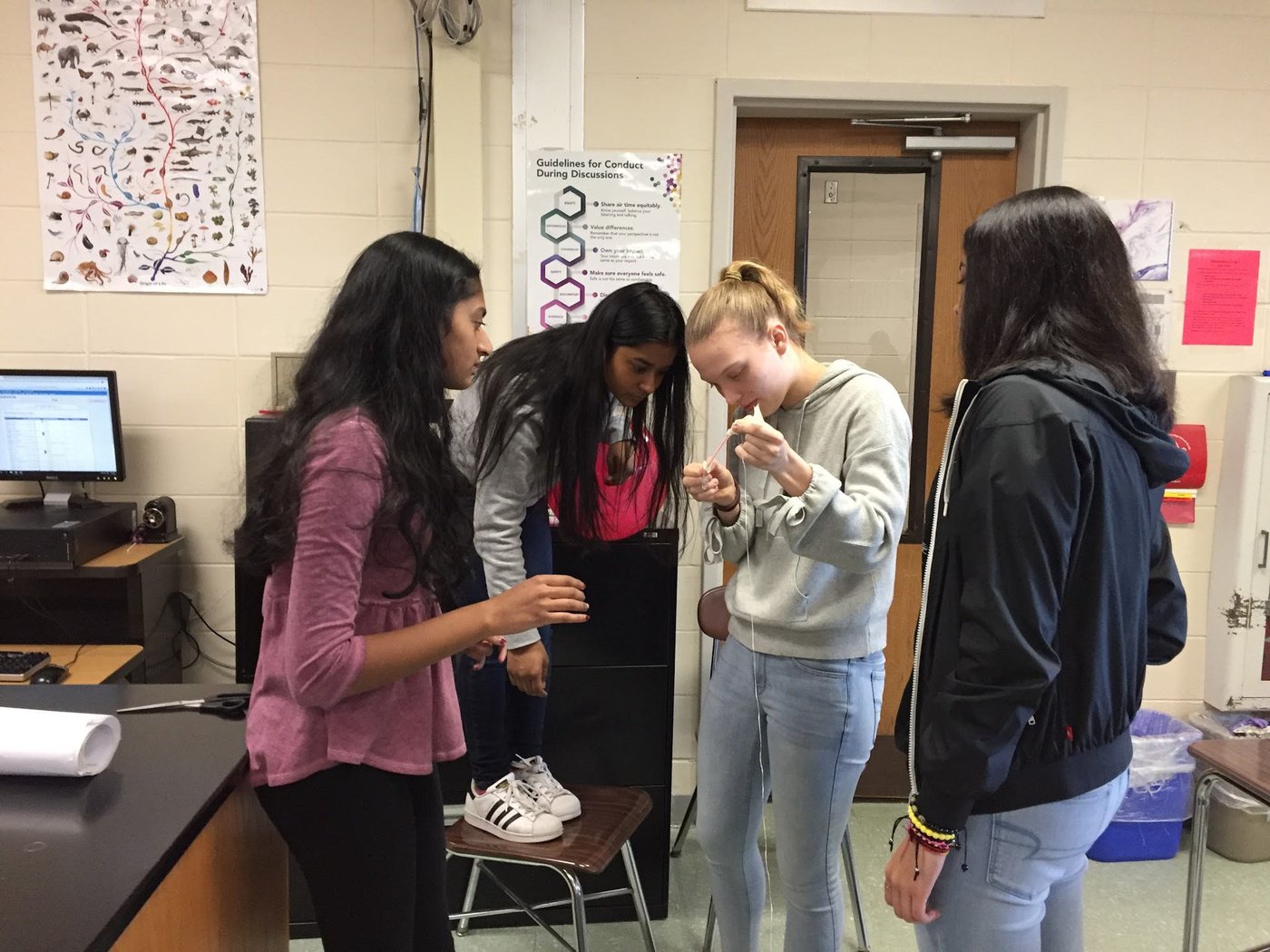
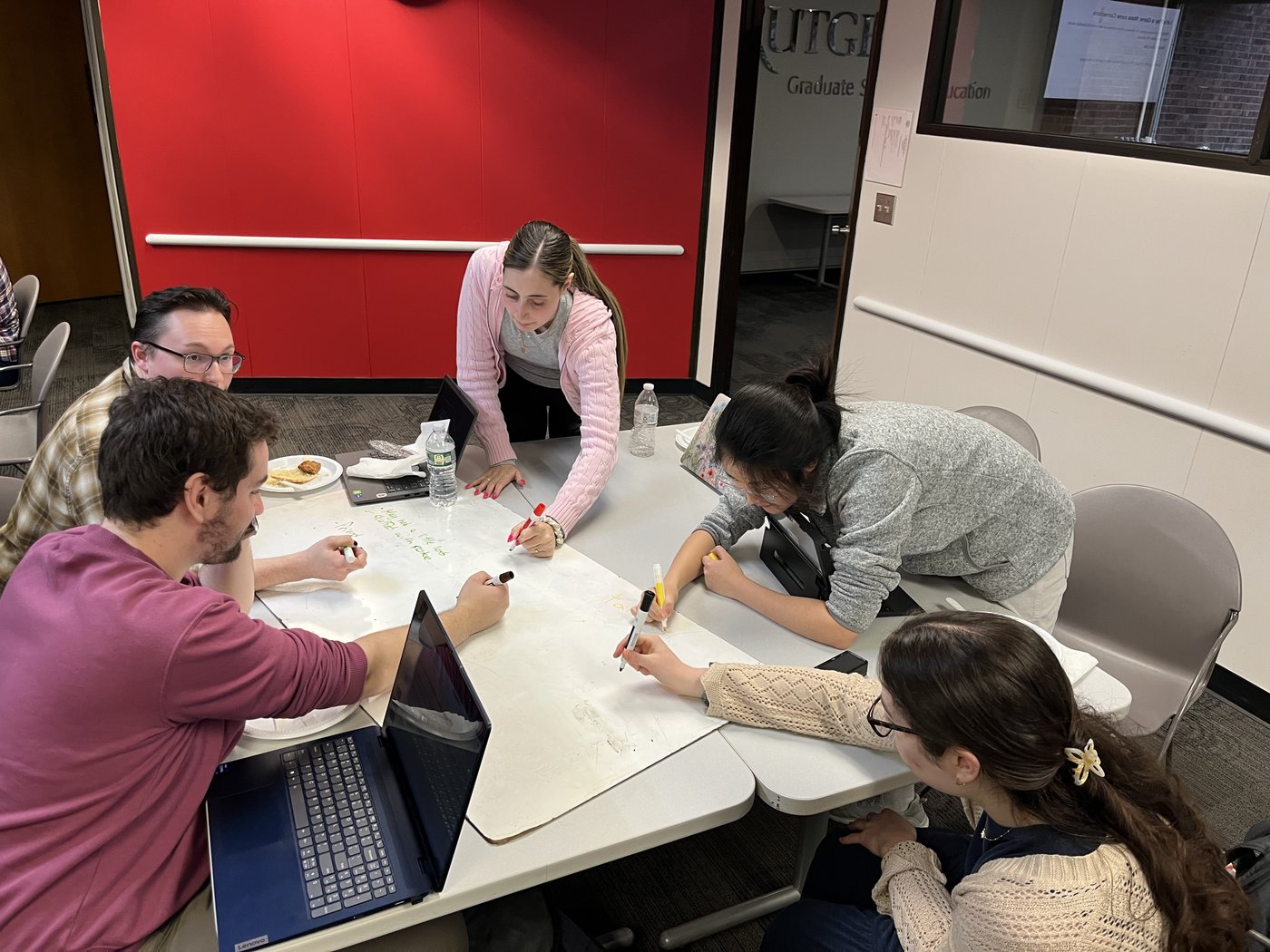
From early childhood schools to universities, on every continent — real ISLE classrooms.
scene 11 · for everyone
Whoever learns this way carries
three questions for life:
three questions for life:
"How do you know this?"
"What are you assuming?"
"How could we put it to the test?"
Doctors, journalists, parents, citizens: in the age of AI and fast headlines, knowing how to put ideas to the test is a public good.
scene 12 · the ten principles
One environment,
ten principles.
ten principles.
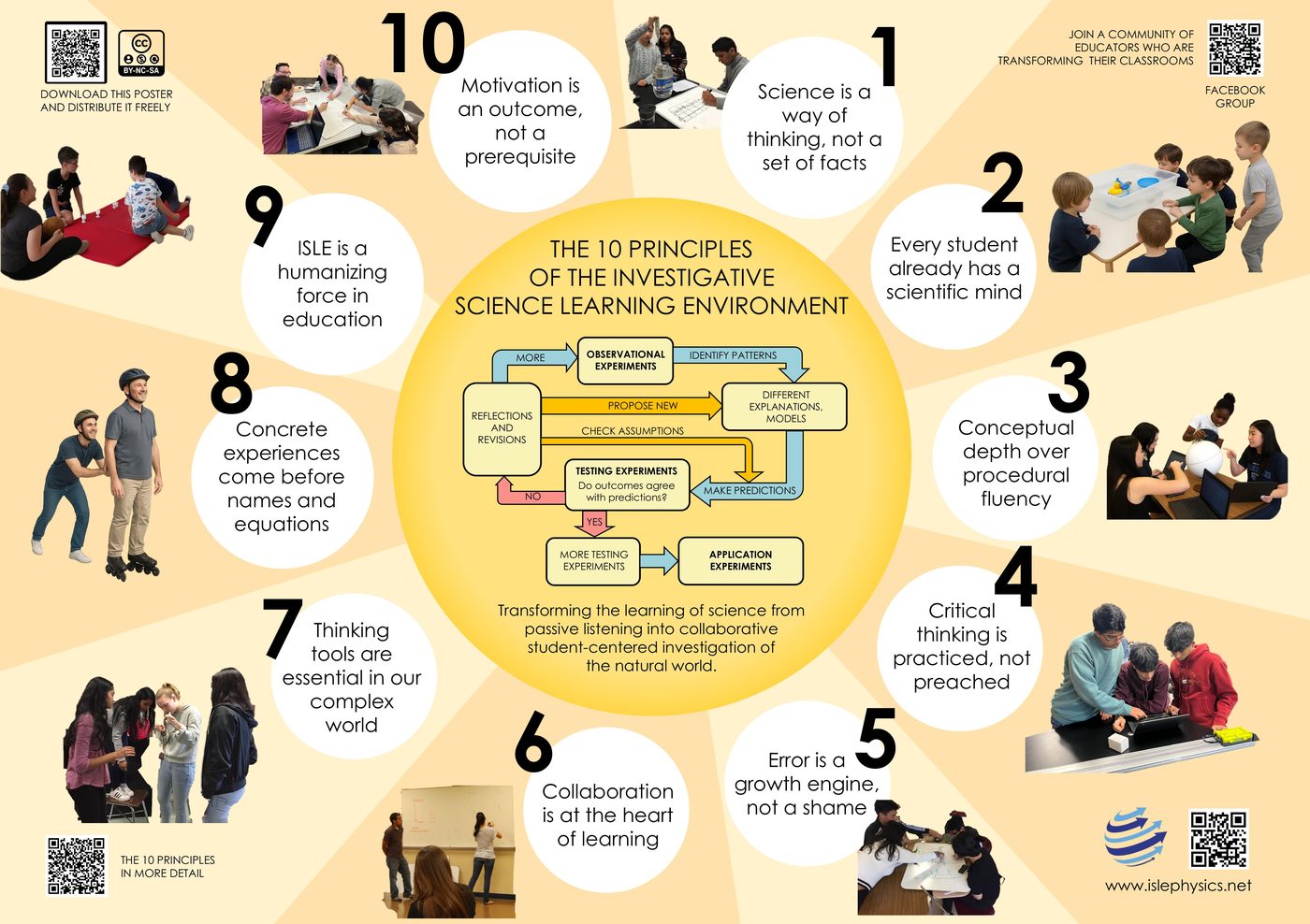
Learn science
by doing science — together.
by doing science — together.
This is ISLE: a learning environment where people become independent thinkers — and feel capable of being one.
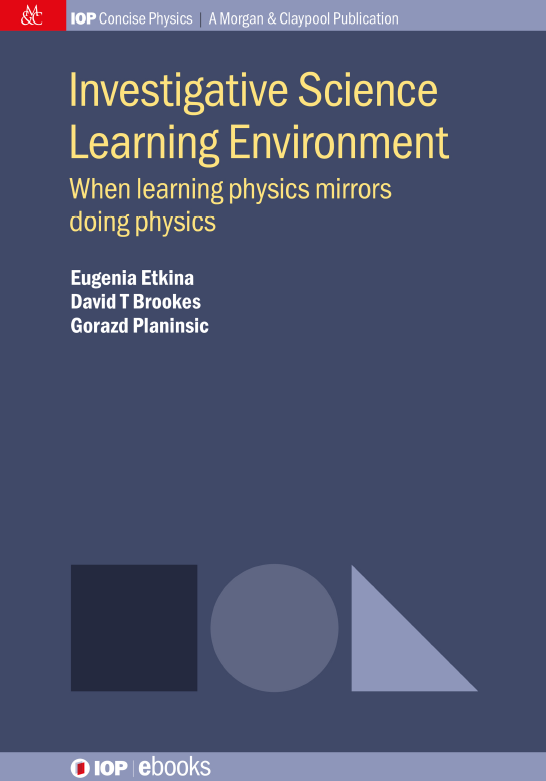
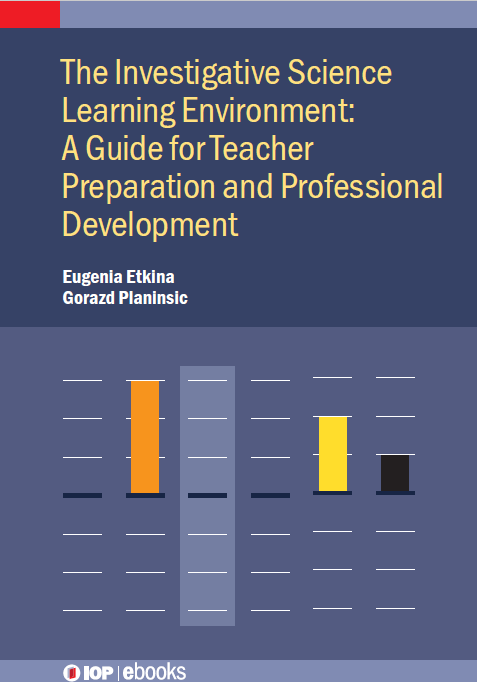
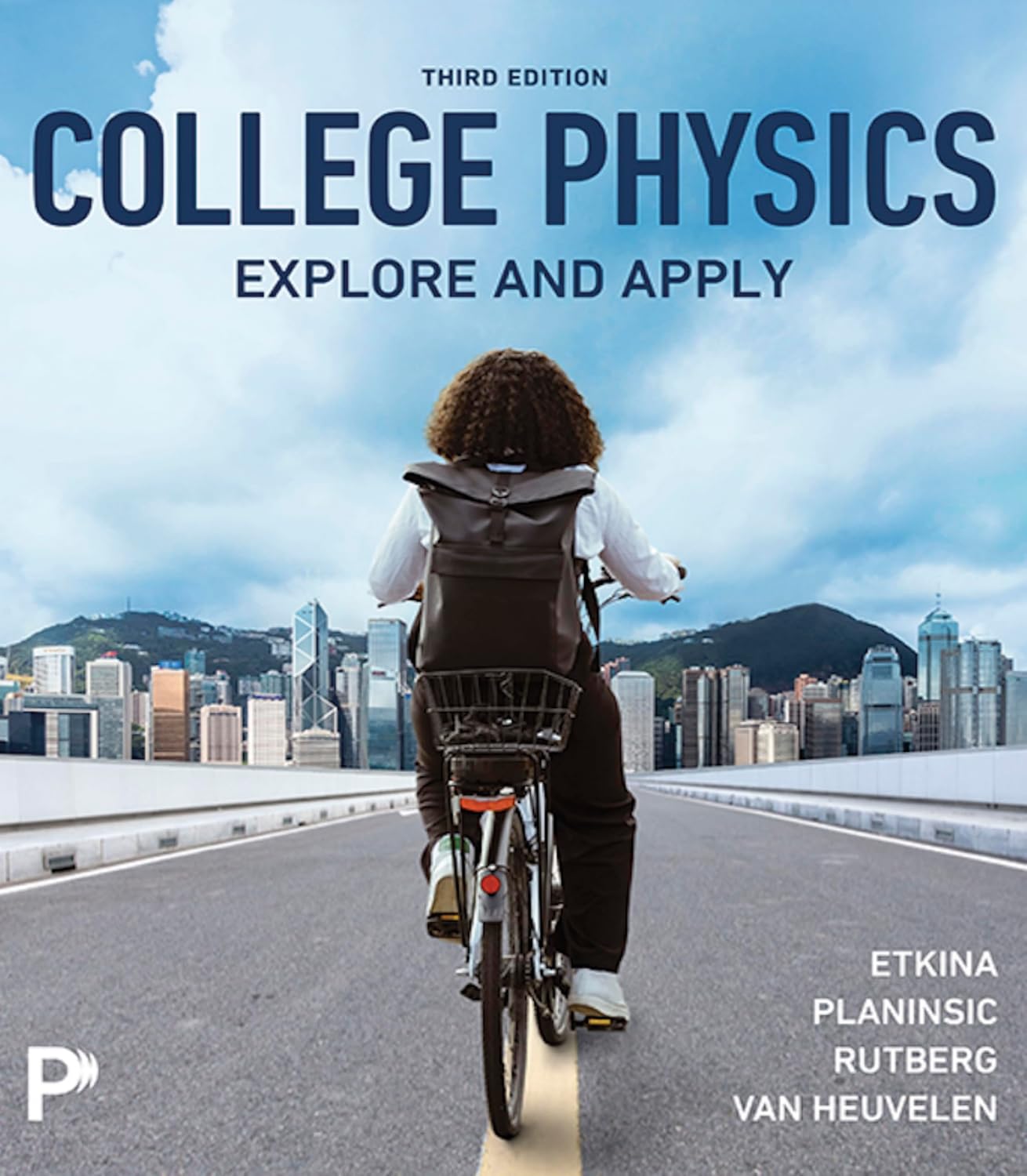
from an idea by Eugenio Tufino — made with the help of Claude
inspired by the work of Eugenia Etkina, Alan Van Heuvelen & collaborators
with thanks to Eugenia Etkina and Gorazd Planinsic for their review and advice
and to Danielle Buggé and Valentina Bologna for their helpful comments
music: "Chiapas Marimba" — Jimena Contreras (free to use)
inspired by the work of Eugenia Etkina, Alan Van Heuvelen & collaborators
with thanks to Eugenia Etkina and Gorazd Planinsic for their review and advice
and to Danielle Buggé and Valentina Bologna for their helpful comments
music: "Chiapas Marimba" — Jimena Contreras (free to use)